
Probably the most spiritually materialist phenomenon in the Tibetan Buddhist tradition is this entity called labrang. The word labrang contains, “la” which is part of the word “lama” and brang, which means something like “nest” and basically means the dwelling or household of a lama.
 In the days after Buddha’s enlightenment, he and his disciples were said to have lived in caves in the forest. Gradually kings and merchants began offering their groves and gardens to the Buddha and sangha. You can still visit these humble places—like Jetavana or Nyagrodha—where the Buddha taught, meditated, and dwelled. Even in the glory days of Buddhism flourishing in India, there was not a lot of opulence. Universities, such as Vikramalashila and Nalanda, grew into thriving learning institutions and large monasteries were established, but nothing compares to the grandeur of Tibetan labrangs in their heyday.
The teachings of the Buddha moved from India to Tibet and were quickly accepted and cherished. Unlike in India, where there were countless religions and spiritual traditions, Buddhism was one of the precious few spiritual paths available in Tibet. Consequently, the Buddhists masters responsible for teaching the precious dharma gained influence. As the lamas earned respect as teachers, some became influential in the secular realm as well. It was not uncommon that the lamas ended up sorting out mundane issues, such as extramarital affairs and land disputes, which could not be resolved by the magistrates, courts, or kings. Their homes, the labrangs, came to be seen as the executive seat of the area, impacting individual lives as well as the function of the monasteries. Eventually, disciples from China and Mongolia became patrons of the Tibetan lamas and with this influx of resources, the Tibetan lamas began to take on more political roles and the labrangs became even more powerful.
 Even a medium-sized labrang would include at least a few key staff members with illustrious titles. The zimpon was like a chamberlain, in charge of the lama’s private quarters. The solpon took care of the pantry and catering. The chöpon was the master of the shrine. But it was the chagdzöd—a sort of Chief of Staff or exchequer—who held the highest rank. The chagdzöd had enormous influence over the labrang’s day to day business and usually had authority over the estate’s land and assets, which could be considerable. Assets often included religious objects such as statues and relics as well as hundreds or even thousands of heads of yak or cattle. Some lamas were like medieval land barons, with countless households under their jurisdiction.
Most importantly, if the lama happened to die, the responsibility for the continuation of the lineage, the lama’s reincarnation, and the reincarnation’s subsequent training, usually fell to the chagdzöd. There are many varied stories about chagdzöds, some continuing the vision of the master, others becoming corrupted and ruining the lineage, and yet others doing a mix of both or neither.
It should be noted that the majority of yogis did not have any of this wealth or mundane paraphernalia and were still influential, like Milarepa who barely had anything to eat. The great Patrul Rinpoche roamed contentedly with the nomads and never required pillars and beams or a solid roof over his head. Likewise, Jamyang Khyentse Wangpo was not a high lama in the sense of having a political or secular ranking. This is important to understand now because, for what it’s worth, new Khyentse tulkus may emerge in the future and should they ever claim to have inherited some kind of rank, they will be shamelessly lying. Rank is something that Jamyang Khyentse Wangpo avoided wholeheartedly. No wonder the great mahasandhi and mahamudra master Lama Gangshar said that the communist Chinese invasion was actually a great service to the dharma.

Lama Gangshar
Nevertheless, because Jamyang Khyentse Wangpo was so respected for his spiritual achievements, he did have many disciples and of course among them were some with secular and political influence. From these conditions, inevitably, the Khyentse Labrang came into existence. It was peanuts compared to many of the powerful and influential labrangs of that time.
The chagdzöed of the Khyentse Labrang during Dzongsar Khyentse Chökyi Lodrö‘s time was his own nephew, Tsewang Paljor. In the early 1950s in Tibet, labrangs had to purchase large quantities of things like large quantities of tea and other rations, usually imported from Chengdu or Xining and therefore provided good business to vendors. Khyentse Labrang was no different. Tsewang Paljor frequently sent horses and mules and yaks from Derge to fetch the merchandise. It wasn’t a safe journey. Robbers and bandits were legendary in the folklore of that time. Khampas loved to tell tales of bravery in battle and were proud of their accounts of sword fights and daggers.

It so happened that one time Khyentse Labrang’s caravan of couriers was robbed on the way to Chengdu by a tribe called Nyagrong and quite a lot of people were killed. Tsewang Paljor was very disturbed by this assault and took the tribe to the courts. The Chinese court was in a place called Kanding (Dartso) in Sichuan. The Chinese magistrate asked for a list of everything that was stolen and for some reason on the list, provided by the labrang itself, was a quantity of opium, of all things. Of course then that became a bigger problem for Tsewang Paljor to deal with and so he spent quite a lot of time in Kanding.
Kanding is in the Garze prefecture near a city called Trehor. Tsewang Paljor was welcomed in Trehor because of his title and his relationship to Khyentse Chökyi Lodrö and happened to befriend a prominent family, the Lhakars. This is where he met his future wife Tselu (Tsering Wangmo), who was quite popular and had many boyfriends. She was the mother of Sogyal Rinpoche. This connection then led to Khyentse Chökyi Lodrö marrying Tselu’s younger sister Khandro Tsering Chödon. Through these marriages, Tsewang Paljor strengthened his family ties to Khyentse Chökyi Lodrö.

Tsewang Paljor, Khandro Tsering Chodron, Mayumla Tselu, with Dzogchen Rinpoche.
Many people, including great masters, were wholeheartedly and spiritually devoted to Dzongsar Khyentse Chökyi Lodrö and therefore took Tsewang Paljor seriously. Some were even afraid of him. Tsewang Paljor was not shy about exerting that influence. I have even heard that whenever Chagdzöd Tsewang Paljor went to visit the great Kyabje Dilgo Khyentse Rinpoche, Rinpoche—out of reverence for Dzongsar Khyentse Chökyi Lodrö—would rise to greet him and show a deep level of courtesy. There are even accounts of how Tsewang Paljor used to scold Neten Chokling Rinpoche.

Jamyang Khyentse Chökyi Lodrö in Gangtok (in 1959)
After 1959 — one of the most mind-shifting changes for Tibetans in modern times—all the monasteries, universities, libraries and the big labrangs were crushed to dust. Obviously a labrang as small as Khyentse Labrang had been destroyed as well. There were no more horses, no sacks of barley or yaks, no footmen, and the treasures either stolen or scattered. Tsewang Paljor helped move Khyentse Labrang to Tsuklakhang, the palace monastery in Sikkim. There they struggled. After a few years, Dzongsar Khyentse Chökyi Lödro passed away and Tsewang Paljor remained in charge.
 A few years later, I was identified by the 41st Sakya Trizin Rinpoche as the incarnation of Dzongsar Khyentse Chökyi Lodrö. It was Tsewang Paljor who came to East Bhutan to make the deal with my family in Yongla. [see Episode One] and subsequently Tsewang Paljor arranged my enthronement at the Tsuklakhang.
The night of the enthronement, Khyentse Labrang was rocked by a surprise announcement: Chagdzöd Tsewang Paljor decided to quit his station as chagdzöd. Only years later did I realize what a big shock this was to many of Dzongsar Khyentse Chökyi Lodrö’s disciples. The impact of the cultural revolution was still felt in those days, people were still in transition and there was so much instability. Refugees were still spilling out of Tibet. It’s not surprising that some people thought that it wasn’t a good time for him to abandon Khyentse Labrang.
I have a clear memory of Tsewang Paljor’s last day as chagdzöd. I was invited to some kind of grand gathering at the kudung, the stupa of Dzongsar Khyentse Chökyi Lödro, and sat near Khandro Tsering Chödrön. Tsewang Paljor was there along with a few other disciples of Chökyi Lodrö, including Ajam of Hochotsang, Phuma Rinam, and Lama Chögden. I will never forget the constant flow of tears from Khandro Tsering Chödrn’s eyes. I was a child and I didn’t fully understand what was happening, but I could feel the atmosphere was tense. I am guessing that Khandro was especially sad about the untimely departure of Tsewang Paljor because he happened to be her brother-in-law.

Ajam of Hochotsang, Khandro Tsering Chödön, Phuma Rinam, and Lama Chögden
A few precious objects had been arranged on a table near us, including a full tiger skin, a drum, and a few other items, which Tsewang Paljor proclaimed were the entire assets of Khyentse Labrang. I don’t distinctly remember, but I have heard that on that day Tsewang Paljor was a little bit drunk and brooding, grumbling about how he had served Khyentse all this time and no one appreciated him. He knelt in front of the kudung and vowed that he was giving up his position forever, which was a big deal.

Later that day, some of the staff reported this all to Kyabje Dilgo Khyentse Rinpoche, who was there for my enthronement. Only many years later, I heard that during this meeting, some of the staff speculated that Tsewang Paljor may not have relinquished all the treasures belonging to the labrang. Kyabje Dilgo Khyentse Rinpoche’s response was: As long as Khyentse’s incarnation was in possession of the Guru Rinpoche statue, the kutsap, all the rest—the gold and silver and the rest—were as useless as ashes.
Now times have changed. I don’t foresee these organizations with chogzöds and sopons continuing much longer. Even though some are clinging to this system, they will be forced to change. If good governance, accountability and transparency exist at all in these organizations, it’s not usually in a form that is accepted in modern society. If a lama has any chance of being respected and accepted, they need systems and practices of good governance, accountability and transparency.

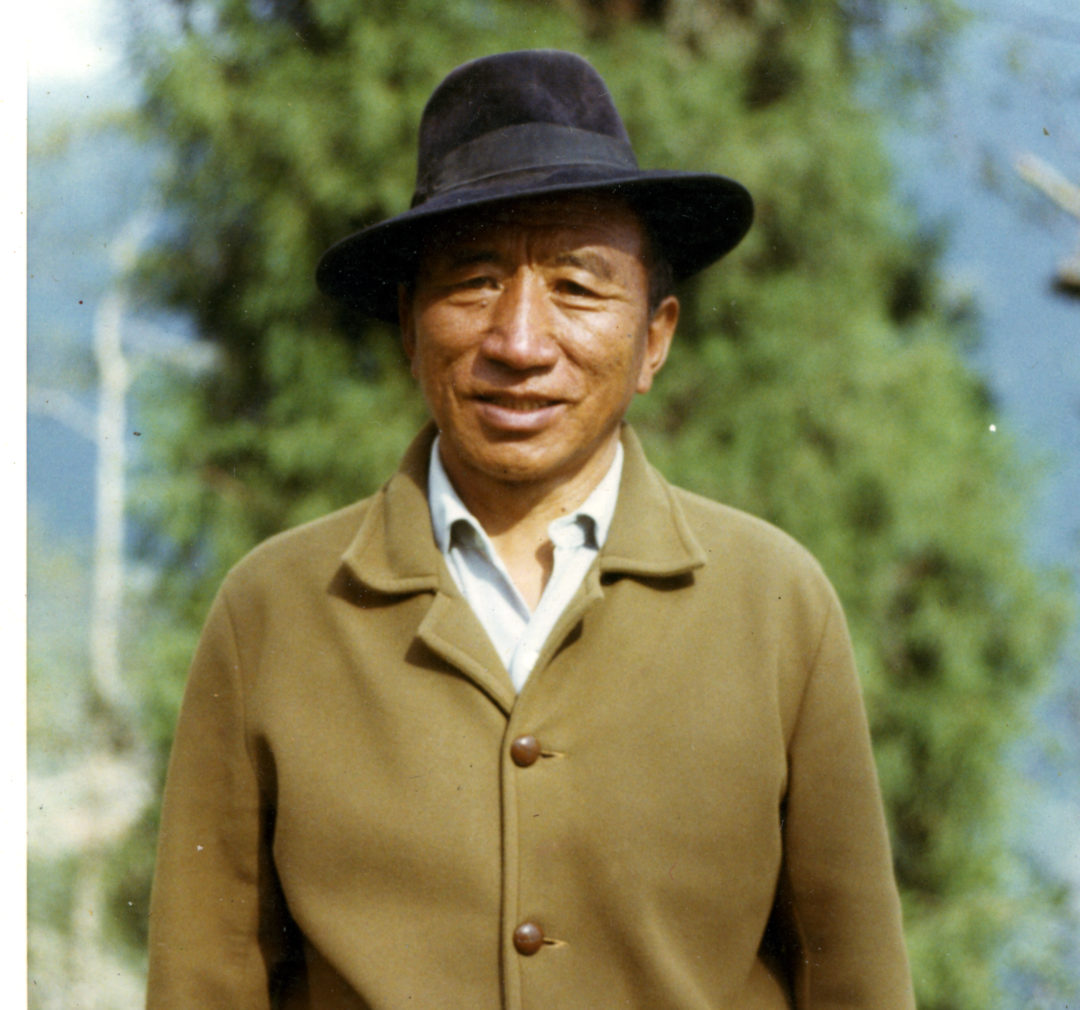
Tsewang Paljor late in life
I learn a lot from each episode. Thank you.
I would be dead without the dharma so Rinpoche la never think for a moment what you do has little value. Please have children who can carry on your legacy like the Sakyas.
Tshewang Penjor late in life hit different, why Rinpoche?
So, Chagdzod Tsewang Palijor’s wife, Mayumla Tshelu, was the older sister of his uncle’s (Dzongsar Khyentse Chokyi Lodro’s) wife, Khandro Tsering Chodron. And you, DJKR, are the keeper of the kutsap.
Hi Rinpoche, the boy in the picture looked more like Dzogchen Rinpoche, the younger brother of Sogyal, instead of Sogyal Rinpoche.
Thank you!
Thanks a lot.
_/\_
🙏🏽🙏🏽🙏🏽 Indeed-y
Has been eagerly waiting for months for the new episode and here it is finally. In an era where finding a great teacher like Rimpoche is extremely rare, Mugwortborn episodic stories and teachings are simply indescribable. The transformation from gun to a saffron attire of TP only means how precious dharma is over the entire possesions of Labrang. Kadrinchey la _(*)_
Thank you for this, Rinpoche. A good lesson! I am also glad to know the details of the family relationship with Sogyal Rinpoche, have heard a number of versions.
oh Rinpoche how good to hear your voice and understanding. and look how you have brought the precious dharma to so many around the world.
bowing in gratitude and devotion.
Thankyou Rinpoché for this candid account. We cling to these plays of power ,its as bad as parliament in England with its Mr Speaker and the cries of”AYE”and “no” used for judging tendencies ,so obviously outdated but habits die hard.New ones emerge…are we awakened soon?
It’s always interesting to read about Rinpoche’s vivid account of how life-of-things have passed as being reflected based on Rinpoche’s ever growing wisdom. I’m always inspired to see it unfold with lessons & messages. With deep respects la
A sacred outlook on a glimpse of Khyentse Labrang in the past.
Amazing is Dilgo Khyentse Rinpoche’s comment about Guru Kutshab. Authentic dharma juxtaposed against spiritual materialism 🙏 🙏 🙏 🙏 🙏 🙏 🙏 🙏
Kadrinche la 🙏
Namey Samey Kadrinchey la 🙂
Thank you so much for sharing la Rinpoche. 🤩🌹🌹🌹🙏🙏🙏
Thank you so much for letting some of your precious life’s magic flow this way too.🌹
So, as the link is well explained here; may I expect that Rinpoche will visit us more often in France at Lerab Ling ? It will be such a great blessing !
Thank you again and again to share your personal experience, this is so precious.
I love your story, I love practicioners’s stories it helps to understand Dharma on a practical level.
Sometimes I heard friends telling « we are not like them » , The Rinpoches are seen like kind of gods, or non human, and it becomes difficult to fallow their instructions, their exemple, we are so « different ».
Your way of sharing, as Mingyour Rinpoche last book also do, shares an aspect who allows us to find a link where we could, ordinary human beings feel able to catch even a smallest sentence we can try to apply and begin to train our mind.
Thank your Dzongsar Jamyang Khyentsé Rinpoché. Please keep going to be, to manifest as you are !
Thank you Rinpoche. It is amazing you retain these memories as a child and can share them with us.
Grateful to hear of your experiences of growing into the responsibilities of your designated role. Look forward to hearing more about good goverance, transparency and accountability. Grateful to have crossed paths with you this lifetime. Aspiration to serve this lineage more and more in future lifetimes.
Once again, thank you so much! Sarva Mangalam!
Comment
Muito especial tudo isso, impressionante e emocionante. Como um grande encontro nessa história recebo sua luz, agradeço e desejo toda paz e bem para todos os seres por sua existência.Todo meu amor!
Desertness
touched by the wind
of love
The Soygyal controversy can be compared in some ways to prevalence of rape culture at elite schools in the Western hemisphere and also probably worthwhile comparing to female students sleeping with their teaching assistants or professors to get ahead. Hardly Ying/Yang when it comes to wielding power, compassion etc etc. So enlightenment in the halls of Ivy lead to other subservient learned behavior in other spheres of life. Doesn’t really seem like crazy wisdom in any sense of the word. However, it seems some get away with this sort of behavior more than others. Perhaps certain things can be learned from matri-lineal cultures?
very grateful dear Rinpoche, to have some glimpse. I do think there are hidden lands and alternate dimensions of time and places that may change around locations, Mugwort born. so grateful for all your teachings. I am still catching up on some of the ones on youtube, thank you so much.
I think you should be transparent when writing an autobiography. You are forgetting to the mention the part when you kidnapped Khandro Tsering Chodron (who had spent most of her life in Gangtok) and desecrated Jamgyang Kyentse’s reliquary stupa from Khandro’s residence in Tsuglakhang, Gangtok in the wee hours of the morning. Jamyang Kyentse’s stupa had to be cut in half so it would fit on the flight to Bir with you. Did it satisfy you to witness Khandro’s physical and mental health deteriorate drastically while you held her against her will in Bir, a completely foreign atmosphere with not a person she knew in sight. To add to that, she was abused by the attended you kept for her. Her mental health deteriorated so badly, she displayed signs of paranoia and withdrawal, to the point she didn’t even recognize her own family after she was finally returned to them.Who would do that? You explain that you are not perfect, I understand that, but why would you harm others?
All these episodes form a river of teachings!
People who took away the labrang’s money kept Khandro with them to justify thier action. DJKR found that she was mistreated and abused, and that Khandro was bearing it all silently though she was aware of everything thats going around.
She was taken to Bir and treated well but senility and age caught up with her.
In the developed countries, aged people even in the most expensive care-homes exhibit symtoms of withdrawl, paranoia, dimentia, confusion etc though they are treated with exceptional care.
You sound so bitter. Are you the grand daughter of ex-Chagzod?